Premium Research Peptides •
Lab-Tested Quality •
Secure Checkout •
Free Shipping on Orders Over $100 •
No hidden fees — all applicable shipping and taxes shown before payment. •
Trusted by Researchers Worldwide •
Disclaimer: Products Sold Are Only for Research Purposes •
Premium Research Peptides •
Lab-Tested Quality •
Secure Checkout •
Free Shipping on Orders Over $100 •
No hidden fees — all applicable shipping and taxes shown before payment. •
Trusted by Researchers Worldwide •
Disclaimer: Products Sold Are Only for Research Purposes •
0
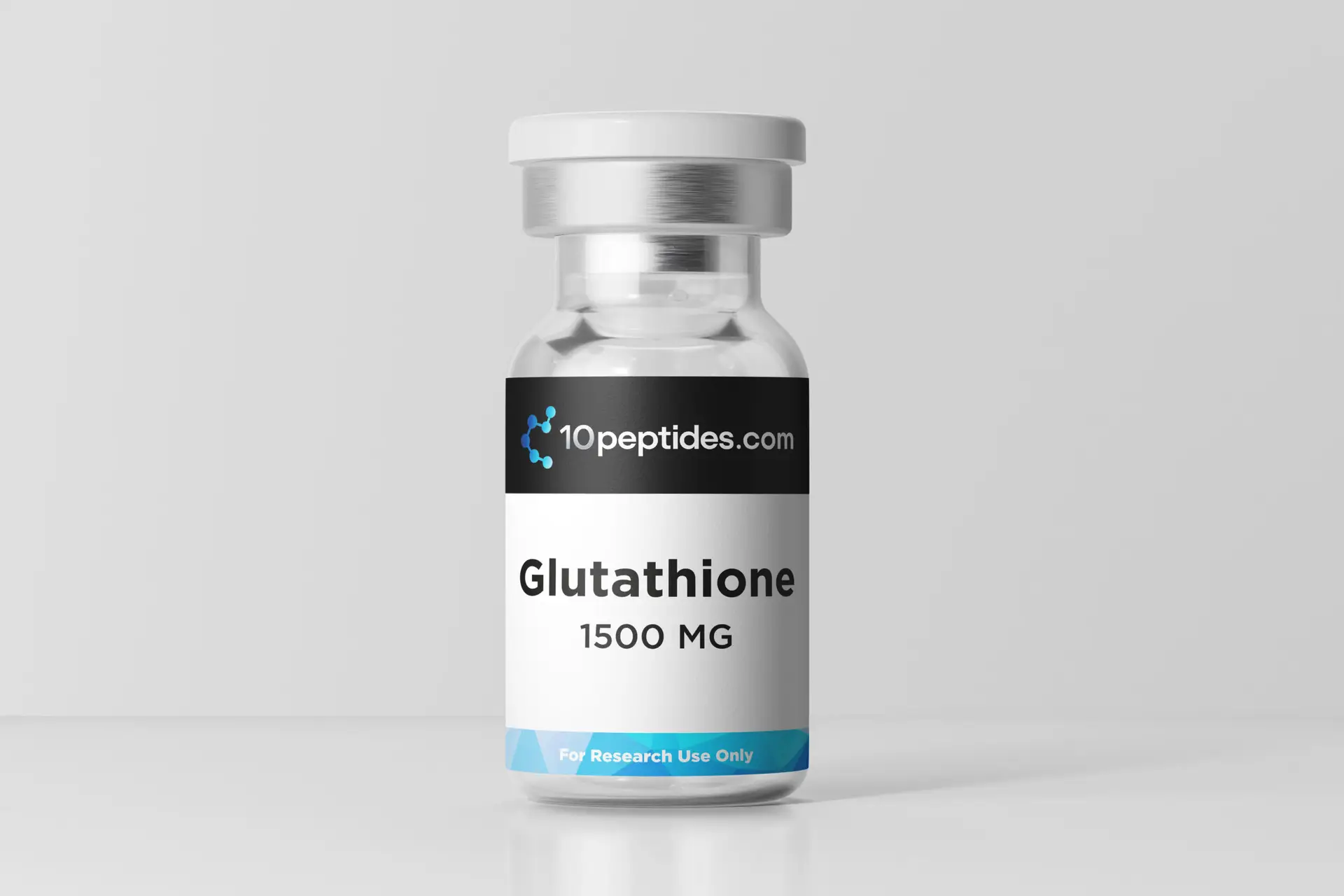
Glutathione 1500
$39.00–$249.00Price range: $39.00 through $249.00
Product Overview: This is a Certified Reference Material (CRM) comprising high-purity L-Glutathione (Reduced Form, CAS 70-18-8). Processed via lyophilization to preserve the active sulfhydryl moiety, this reagent is engineered strictly for in vitro analytical workflows, including oxidative stress modeling and hepatic enzyme kinetics (GST/GPx assays). Unlike oxidized bulk powders, our inventory is maintained under a continuous USA Cold-Chain to ensure thermodynamic stability and assay reproducibility
⚠ Product Usage: For Research Use Only – Not for Human or Veterinary Use
10peptides products are supplied to qualified research professionals and institutional users for in vitro laboratory research only. KYC verification is required prior to order fulfillment, and we reserve the right to refuse orders that do not meet buyer qualification criteria. These products are not drugs, foods, cosmetics, or dietary supplements, have not been evaluated by the FDA, and are not intended for human or animal use. Any such use is prohibited and may violate federal, state, or local law. By purchasing, the buyer represents and warrants that the product will be used solely for in vitro research.
Molecular Specifications
Molecular Data
Product Ref
glutathione
CAS Number
70-18-8
Chemical Class
tripeptide
Molecular Weight
\(307.32 \text{ g/mol}\)
Sequence Length
γ-L-glutamyl-L-cysteinyl-glycine
Format
Lyophilized powder (typically solid white appearance)
Mass Format
1500 mg
Purity
greater than 99%
Solubility
290 – 300 mg/mL
Storage
Store at -20°C as a dry lyophilized powder for long-term stability
Intended Use
For laboratory research use only
Product Description
FOR RESEARCH PURPOSES ONLY — This compound is not FDA approved.
L Glutathione Reduced (GSH) – Lyophilized Reagent 1500 mg
Disclaimer : For Research Use Only (RUO). Not for human use.
Technical Note: Beware of vendors citing MW ~612 g/mol. That is Oxidized Glutathione (GSSG), the byproduct of oxidative stress. For antioxidant and therapeutic modeling, Reduced (MW 307) is the required substrate.
Product Format : 1500mg Net Content (Lyophilized Vial)
Grade : Reference Material (≥99% HPLC)
CAS : 70-18-8
L Glutathione (Reduced) is the bioactive tripeptide substrate (γ-L-glutamyl-L-cysteinyl-glycine) required for defining redox potential in cellular assays.
Unlike Oxidized (GSSG) or low-purity industrial grades that compromise data integrity, this Lyophilized Reagent is processed to maintain the active sulfhydryl (-SH) moiety. The 1500mg unit size is configured for the preparation of fresh, high-molarity stock solutions in multi-well enzymatic or metabolic workflows (e.g., GST/GPx kinetics).
Chemical Identity & Mechanism
What GSH Does in Research Systems
Master Redox Buffer : The ratio of Reduced Glutathione (GSH) to Oxidized Glutathione (GSSG) is the primary quantifiable metric for cellular oxidative stress. In healthy physiology, this ratio exceeds 100:1; in pathological models (e.g., MASLD, Neurodegeneration), it collapses, driving apoptosis.
Enzymatic Substrate : GSH is the obligatory cofactor for Glutathione Peroxidase (GPx) (neutralizing peroxides) and Glutathione S-Transferases (GSTs) (phase II detoxification).
Pheomelanin Switch : In dermatological research, GSH is investigated for its ability to inhibit tyrosinase and redirect melanogenesis from dark eumelanin to lighter pheomelanin.
Structure of Reduced L Glutathione
2D Chemical Structure of Reduced L Glutathione (GSH) tripeptide showing the gamma-glutamyl-cysteinyl-glycine sequence with the active sulfhydryl (-SH) group highlighted.
Molecular Identity. Chemical structure of L Glutathione (Reduced Form). Verified CAS 70-18-8. Molecular Weight: 307.32 g/mol. This monomeric form contains the free thiol (-SH) required for electron donation in redox assays, distinct from the oxidized dimer (GSSG).
Comparative Research Context
Direct GSH vs. Precursors vs. Incretin-Class Tools
Feature
L Glutathione (Direct)
GlyNAC (Precursors)
Molecule Type
Intact Tripeptide
Amino Acid Blend
Mechanism
Direct Redox Buffer
Rate-Limiting Substrate
Primary Utility
Acute Restoration (Viral, Hepatic)
Chronic Maintenance (Geriatric)
Assay Target
Cytosolic GSH/GSSG Ratio
De Novo Synthesis Capacity
Research Focus
MASLD, Long-COVID, T2DM
Aging “Deficit” Correction
Practical Interpretation for Researchers
Select Direct GSH when the experimental design requires immediate elevation of cytosolic antioxidant capacity or when studying acute oxidative insults (e.g., viral load models, acute toxicity).
Select GlyNAC when studying age-related downregulation of synthesis enzymes.
Research context and market status
1 – The “Delivery Revolution” (Liposomal & Micellar)
Historically, oral GSH research was dismissed due to rapid hydrolysis in the GI tract.
2025 Update : New Liposomal and LipoMicel delivery systems have fundamentally changed this landscape. Research confirms these vectors protect the peptide bond, allowing intact GSH to bypass hepatic hydrolysis and elevate systemic levels effectively.
Lab Implication : Researchers are now utilizing these advanced vectors to test GSH efficacy in systemic immunity (e.g., restoring Th1 cytokine responses in TB/HIV models).
2 – Metabolic Utility : The Liver-Pancreas Axis
MASLD (Fatty Liver) : Recent systematic reviews (2014–2024) identify GSH as a “fire extinguisher” for hepatic inflammation, significantly reducing ALT and oxidative DNA damage (8-OHdG) in MASH subtypes.
T2DM (Diabetes) : High-dose protocols have been shown to protect Insulin Receptor Substrate (IRS) proteins from stress kinase phosphorylation, directly improving whole-body insulin sensitivity in obese models.
3 – Critical Safety Warning :
Data Integrity & Usage Classification The Issue : FDA guidance and pharmacopeial standards strictly differentiate between Sterile APIs (for compounding) and Research Reagents.
Our Classification : 10peptides supplies this material strictly as a Chemical Reference Standard. It is not manufactured under the sterile conditions required for in vivo application.
The Protocol : We guarantee physicochemical stability and <1.0 EU/mg endotoxin levels solely to ensure reproducibility in in vitro cellular environments. This material is for laboratory analysis only.
Our Stance : 10peptides supplies GSH strictly as a Certified Reference Material (CRM) for analytical and in vitro applications. We guarantee thermodynamic stability and <1.0 EU/mg endotoxin levels solely to ensure reproducibility in sensitive cell culture environments.
Usage Definition : This material is chemically classified as a Laboratory Reagent. It is not designated for formulation, manufacturing, or any in vivo application.
Handling & Stability
Storage : Store lyophilized powder at -20°C. Desiccate to prevent moisture absorption.
Reconstitution : Use bacteriostatic water or sterile buffer (PBS).
Stability Warning : Once reconstituted, GSH oxidizes rapidly to GSSG in the presence of air. Use immediately or freeze in single-use aliquots. Do not store dissolved GSH at room temperature.
Frequently Asked Questions
Q1: Is this product suitable for cosmetic formulation or personal use?
No. This material is a lyophilized Chemical Reference Standard designed strictly for in vitro laboratory analysis. It is not a sterile pharmaceutical ingredient (API) and does not meet the necessary pharmacopeial monographs (USP/EP) for cosmetic, therapeutic, or in vivo application. It lacks the buffer systems and sterility required for any biological administration.
Q2: Why use “Reduced” Glutathione?
Reduced” (GSH) is the active antioxidant form that donates electrons. “Oxidized” (GSSG) is the spent form. For research into redox capacity, you must start with the reduced form to measure the system’s ability to neutralize ROS.
Q3: How does this differ from NAC (N-Acetylcysteine)?
NAC is a precursor that provides cysteine. GSH is the final molecule. Using GSH directly in
assays bypasses the rate-limiting enzymatic steps required to convert NAC, providing immediate redox control in your model.
Q4: Can I use this for “Anti-Aging” research?
Yes, in the context of cellular senescence models. GSH depletion is a hallmark of aging (the “GSH Gap”). Researchers use this peptide to test if restoring cytosolic levels can reverse mitochondrial dysfunction in senescent cell lines.