Description
“These Statements Have Not Been Evaluated By The Food And Drug Administration.
This Product Is Not Intended To Diagnose, Treat, Cure Or Prevent Any Disease.”
For Research Use Only.
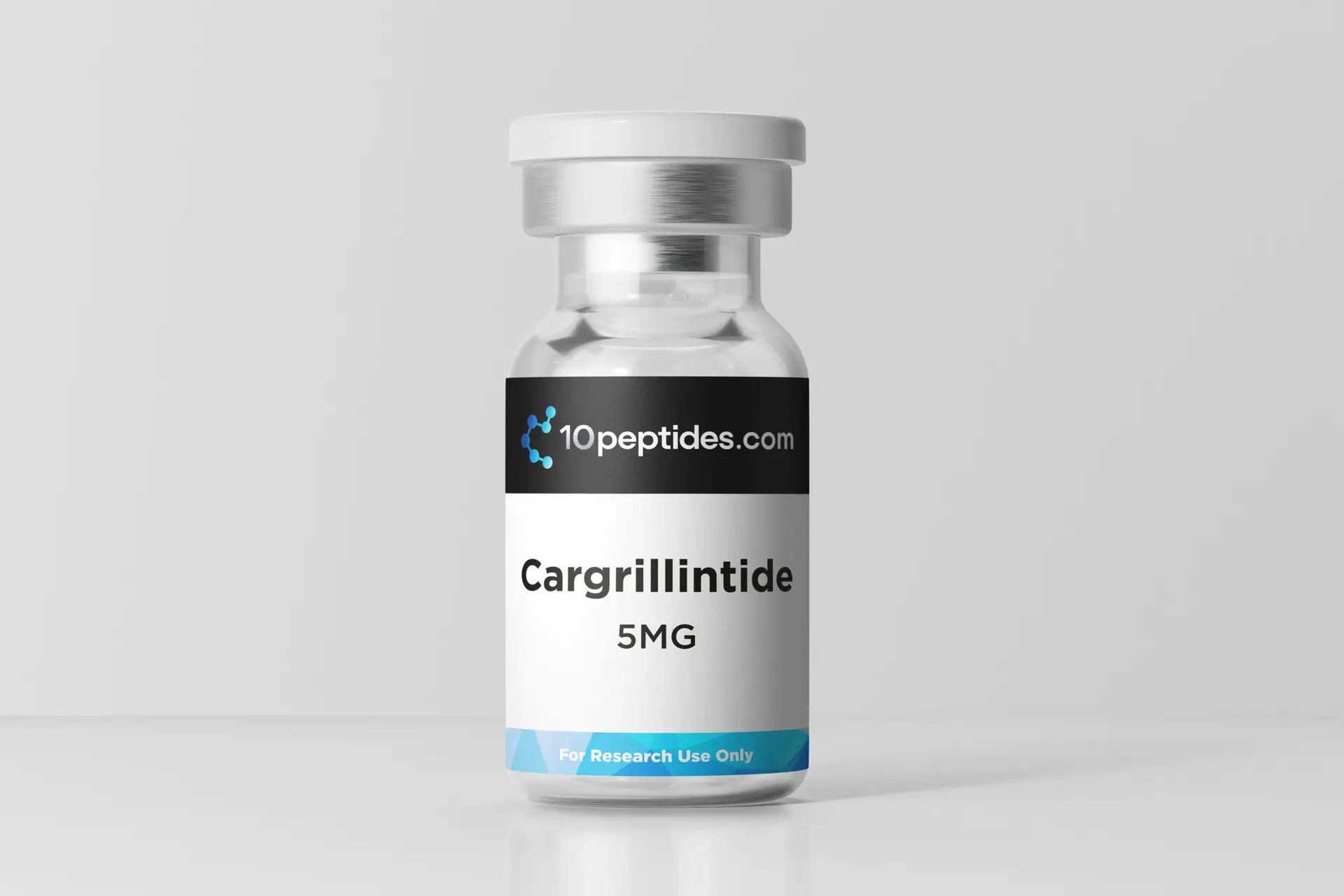
Cagrilintide is a long-acting, 39-amino acid acylated peptide derivative of amylin that acts as a dual amylin and calcitonin receptor agonist (DACRA) for obesity treatment. Its structure is based on pramlintide, featuring key modifications (Asn14Glu, Val17Arg, Pro25/28/29, Tyr37Pro) to improve metabolic stability and reduce aggregation.
- Amino Acid Chain: 39 residues with C-terminal amidation.
- Modifications: Contains 14E (Glu) and 17R (Arg) mutations, along with substitutions (25P/28P/29P) that enhance receptor interaction and decrease fibrillation.
- Acylation: Features a side-chain modification (lipidation) at the N-terminus that extends its half-life.
Structure: It is a linear polypeptide with a disulphide bridge between positions 2 and 7, similar to amylin.
Key Benefits of Cagri for Research:
- Appetite Suppression and Satiety: Cagri mimics the effects of amylin, a hormone co-secreted with insulin by the pancreas, to enhance feelings of fullness and reduce appetite. This makes it a valuable compound for research into appetite regulation, where understanding mechanisms of satiety and hunger are crucial, especially in studies related to obesity and eating disorders.
- Potential for Weight Management: Given its appetite-suppressing properties, Cagri is being investigated for its potential to promote weight loss. It helps reduce caloric intake by slowing gastric emptying and increasing the sensation of fullness. This makes it highly relevant for studies exploring pharmaceutical interventions for weight management and obesity treatment.
- Synergistic Effects with Other Weight-Loss Compounds: Cagri has been investigated for its combined use with other metabolic compounds, such as GLP-1 receptor agonists like sema, to enhance weight loss effects. Research exploring combination therapies that target different aspects of appetite regulation and metabolism stands to benefit from cagri’s unique profile.
- Glucose Regulation and Metabolic Health: Amylin plays a role in glucose regulation by slowing the rate at which food moves from the stomach to the small intestine, which in turn affects the speed of glucose absorption into the bloodstream. Cagri , as an amylin analogue, could be important in studies focused on glucose homeostasis, insulin sensitivity, and overall metabolic health, making it relevant for diabetes research.
- Potential for Treatment of Metabolic Disorders: Beyond weight loss, Cagri is of interest in broader research on metabolic syndromes and related conditions, such as insulin resistance and dyslipidemia. By influencing both energy intake and glucose metabolism, it provides a promising approach for studying interventions for metabolic health improvement.
- Long-Acting Action: Cagri’s long-acting profile allows for more sustained effects on satiety and metabolic regulation compared to natural amylin, making it a key tool in research designs requiring long-term studies of appetite control and weight management interventions.