Premium Research Peptides     •     Lab-Tested Quality     •     Secure Checkout     •     Free Shipping on Orders Over $100     •     No hidden fees — all applicable shipping and taxes shown before payment.     •     Trusted by Researchers Worldwide     •     Disclaimer: Products Sold Are Only for Research Purposes     •     Premium Research Peptides     •     Lab-Tested Quality     •     Secure Checkout     •     Free Shipping on Orders Over $100     •     No hidden fees — all applicable shipping and taxes shown before payment.     •     Trusted by Researchers Worldwide     •     Disclaimer: Products Sold Are Only for Research Purposes     •    

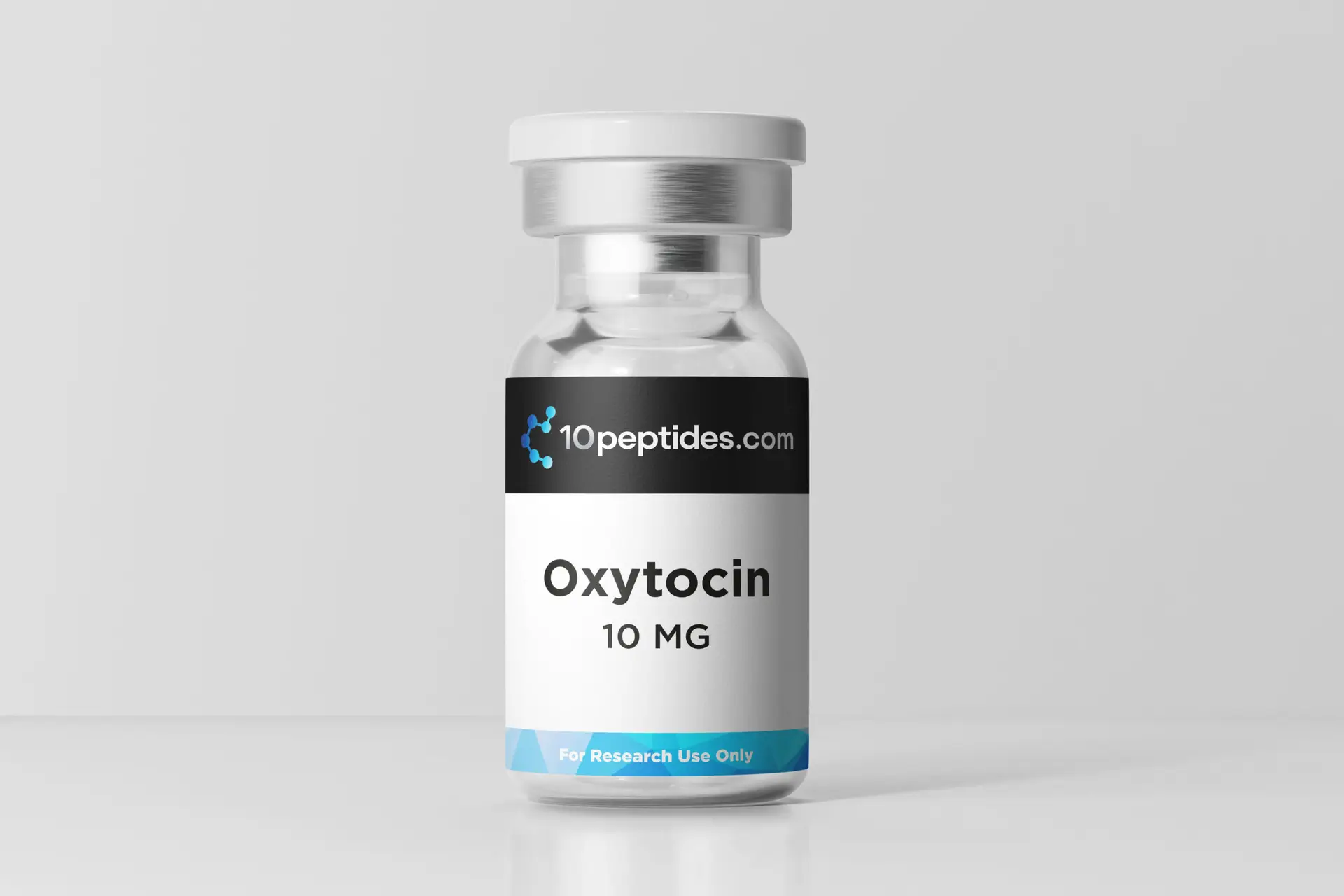
Oxytocin 10mg

Price range: $49.00 through $119.97

Oxytocin is a cyclic nonapeptide (a peptide containing nine amino acids) that functions as both a peripheral hormone and a central neurotransmitter.

⚠ Product Usage: For Research Use Only – Not for Human or Veterinary Use

10peptides products are supplied to qualified research professionals and institutional users for in vitro laboratory research only. KYC verification is required prior to order fulfillment, and we reserve the right to refuse orders that do not meet buyer qualification criteria. These products are not drugs, foods, cosmetics, or dietary supplements, have not been evaluated by the FDA, and are not intended for human or animal use. Any such use is prohibited and may violate federal, state, or local law. By purchasing, the buyer represents and warrants that the product will be used solely for in vitro research.

Molecular Specifications

Molecular Data
Product Ref
Oxytocin
CAS Number
50-56-6
Chemical Class
Peptide Hormone / Cyclic Nonapeptide (Neurohypophysial hormone)
Molecular Weight
1007.2 g/mol
Sequence Length
CYIQNCPLG-NH2
Format
Lyophilized powder (typically solid white appearance)
Mass Format
Available commonly in vials of 1 mg, 5 mg, or milligram/gram custom bulk sizes.
Purity
>98%
Solubility
Highly soluble in water (up to 100 mg/mL)
Storage
Store at -20°C as a dry lyophilized powder for long-term stability
Intended Use
For laboratory research use only

Product Description

“These Statements Have Not Been Evaluated By The Food And Drug Administration. This Product Is Not Intended To Diagnose, Treat, Cure Or Prevent Any Disease.”


Description

Our Oxytocin is a high-purity research compound formulated for advanced scientific and investigative research. This product is intended to support preclinical studies exploring neurochemical signaling, social behavior mechanisms, and physiological regulatory pathways in controlled laboratory environments.

Key Component

Oxytocin:
Oxytocin is a naturally occurring peptide hormone that has been widely studied for its role in regulating social bonding, behavioral responses, and neuroendocrine signaling. Research investigations have explored its involvement in emotional processing, stress response pathways, and various physiological regulatory functions across different experimental models.

Features

  • High Purity: Synthesized under strict quality standards to ensure reliable and consistent research outcomes.

  • Research-Grade Quality: Prepared to support precise and controlled laboratory investigations.

  • Research-Focused Profile: Suitable for studies related to neurochemical signaling, behavioral science, and endocrine regulation pathways.

Intended Use

This product is strictly intended for in vitro and laboratory research only. It is not intended for human consumption, diagnostic use, or therapeutic application. All purchasers must be qualified professionals, laboratories, or research institutions.

Potential Research Application

1. Neuropsychiatry and Social Behavior

Oxytocin is a primary tool for studying the neural mechanisms of social cognition. Researchers use it to investigate:

  • Autism Spectrum Disorder (ASD): Investigating whether intranasal oxytocin can modulate social deficits, improve eye contact, or enhance emotion recognition by targeting oxytocin receptors (OXTR) in the brain.

  • Social Anxiety and PTSD: Exploring how the peptide attenuates amygdala hyperactivity, effectively mitigating fear responses and social avoidance behaviors.

  • Schizophrenia: Studying its potential as an adjunctive treatment to improve social cognition and reduce negative symptoms.

2. Substance Use and Addiction Dynamics

Oxytocin interacts heavily with the brain’s dopamine reward pathways. Current addiction research focuses on its ability to:

  • Reduce Drug Cravings: Testing how oxytocin administration alters the reward value of substances like alcohol, opioids, and cocaine.

  • Mitigate Withdrawal Stress: Studying its capacity to buffer the stress-induced relapse triggers regulated by the hypothalamic-pituitary-adrenal (HPA) axis.

3. Metabolic and Food Intake Regulation

Beyond its social reputation, oxytocin acts as a metabolic regulator in the central nervous system:

  • Appetite Suppression: Researching its role in the hypothalamus to reduce caloric intake, specifically targeting preferences for carbohydrates and fats.

  • Obesity and Homeostasis: Investigating its impact on lipid metabolism, insulin sensitivity, and energy expenditure in animal models.

4. Pain Modulation (Analgesia)

Oxytocin receptor activation has been shown to modulate nociceptive (pain signaling) pathways:

  • Central Analgesia: Studying how it influences spinal and supraspinal mechanisms to alleviate chronic pain, migraines, and inflammatory pain.

  • Synergistic Effects: Evaluating its interaction with endogenous opioid systems to achieve pain relief with lower doses of traditional narcotics.

5. Maternal-Fetal Medicine and Smooth Muscle Physiology

This represents the classic physiological research track:

  • Uterine Receptor Sensitivity: Mapping how receptor density shifts throughout gestation to better understand or prevent preterm labor.

  • Postpartum Therapeutics: Engineering stable synthetic analogues with longer half-lives than native oxytocin to better manage postpartum hemorrhage or optimize lactation induction.

Methodological Note: A significant hurdle in central nervous system (CNS) research involves the Blood-Brain Barrier (BBB). Native oxytocin has poor BBB penetration. Consequently, modern research frequently utilizes intranasal delivery protocols or investigates small-molecule OXTR agonists capable of more readily entering the brain space.

FAQ

Is research-grade Oxytocin safe for human use?

Keep in mind that lab-grade oxytocin is strictly For Research Use Only (RUO). Because it isn't processed under the hyper-sterile cGMP rules required for medical facilities, it is strictly meant for benchwork or animal models—never for human use.


What is the absolute best way to store Oxytocin so it doesn't degrade?

Keep it in the freezer at -20°C (or colder). Make sure the vial is tightly sealed alongside a small desiccant pack to keep moisture out. Stored like this, it can sit happily for several years.


Are there any hidden variables that affect how it binds in an assay?

Yes, and it is a detail that causes a lot of baseline confusion in data. The oxytocin receptor is highly sensitive to its chemical environment. Specifically, it relies heavily on Magnesium ($Mg^{2+}$) and Zinc ($Zn^{2+}$) ions to lock into the right shape. If your assay buffer is completely stripped of these minerals, you might see a major drop in how effectively the peptide binds to its receptors.


0