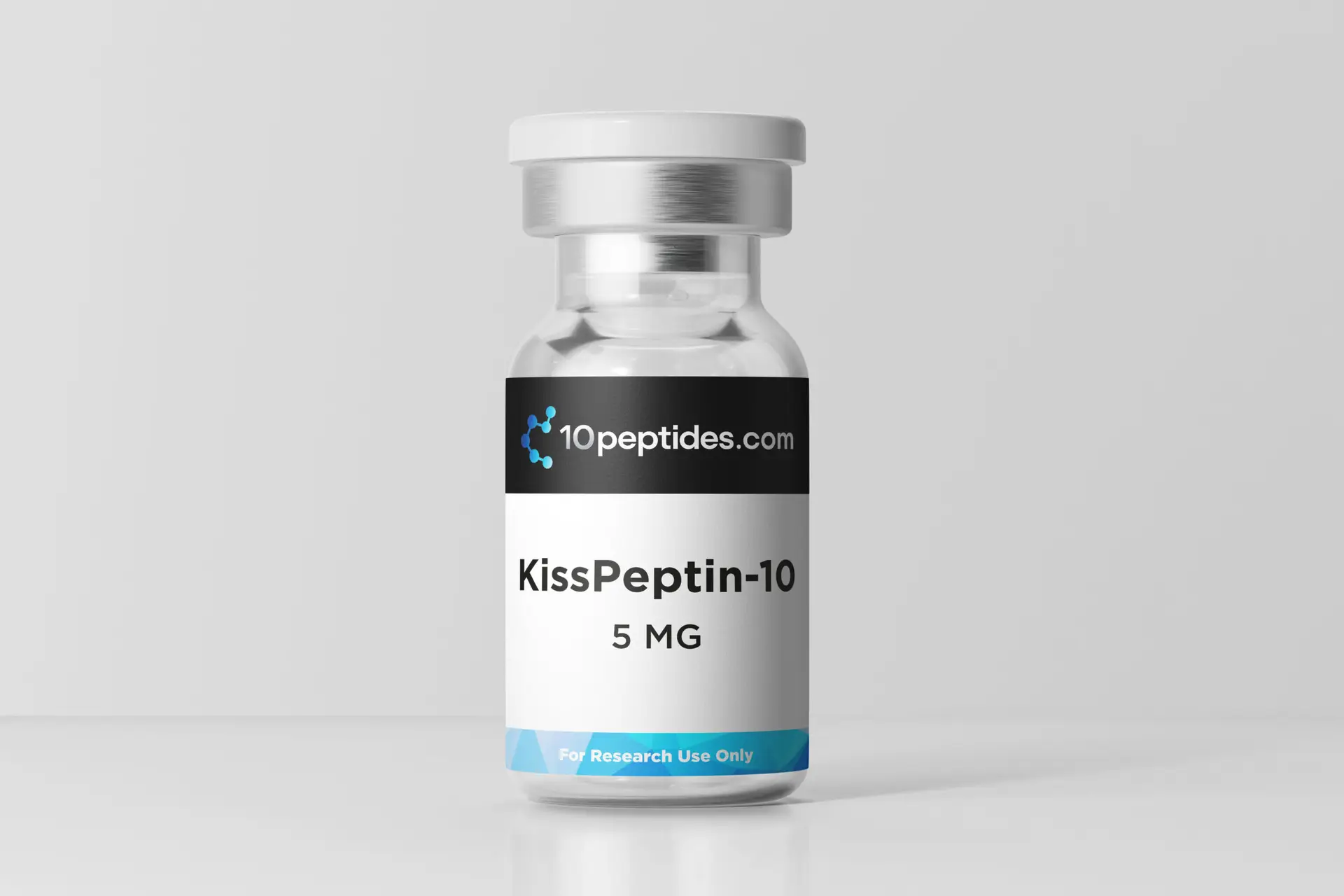
Kisspeptin Research Peptide
Kisspeptin is a synthetic research peptide supplied for controlled laboratory investigation. Researchers study this peptide in structured research focused on peptide signaling, receptor interaction models, and sequence specific behavior within experimental systems. Its defined peptide structure allows laboratories to design repeatable studies under stable and standardized research conditions.
Kisspeptin belongs to a group of signaling peptides that researchers commonly examine to better understand molecular communication within controlled experimental environments. Because of its clearly defined sequence, laboratories can isolate and observe specific interaction patterns while maintaining precise control over testing conditions. This makes the peptide suitable for research projects that require consistency and repeatability.
Research Focus and Experimental Context
In laboratory research settings, scientists use Kisspeptin to explore how peptide signals interact with receptor based systems. This type of research helps teams examine signaling timing, interaction strength, and sequence dependent responses within controlled models. By focusing on defined signaling peptides, laboratories can build experiments that generate clear and comparable data sets.
Researchers often design studies using Kisspeptin to support broader investigations into peptide communication networks. These studies rely on consistent materials that behave predictably across repeated tests. The defined nature of this peptide helps reduce uncertainty during experimental setup and data collection.
Structural Characteristics and Stability
Kisspeptin features a clearly defined peptide sequence that supports stability during laboratory handling and preparation. Researchers value this structural clarity because it allows accurate measurement and controlled application during experiments. The peptide format also supports precise dilution and transfer protocols commonly used in research settings.
Because the peptide maintains consistent behavior when handled according to standard laboratory practices, researchers can focus on experimental design rather than troubleshooting material variability. This stability supports both short term experiments and long term research projects that require dependable materials across multiple phases.
Laboratory Handling and Preparation
In laboratory environments, scientists handle Kisspeptin using established peptide preparation and safety procedures. Researchers typically follow institutional protocols for storage, reconstitution when applicable, and controlled transfer during experimental setup. These practices help preserve peptide integrity throughout the research process.
The peptide format allows accurate weighing and measurement, which supports precise experimental control. By maintaining consistent preparation methods, research teams can reduce variation and improve the quality of collected data. This reliability plays an important role in studies that involve repeated testing cycles or comparative analysis.
Role in Structured Research Workflows
Researchers value Kisspeptin for its compatibility with structured laboratory workflows. Its defined sequence supports repeatable testing and allows teams to design protocols that rely on consistency and precision. This makes the peptide suitable for long term projects that require stable research materials over extended periods.
Laboratories often incorporate Kisspeptin into research programs that compare signaling behavior across different peptides or experimental conditions. Its predictable handling characteristics allow teams to isolate variables more effectively and draw clearer conclusions from their data.
Data Collection and Experimental Reliability
One of the key advantages of working with Kisspeptin in research settings is its reliable behavior. Researchers depend on materials that perform consistently across experiments, and this peptide supports that goal. Its stable characteristics help minimize unexpected changes during testing.
By reducing variability, Kisspeptin allows research teams to focus on data interpretation rather than material performance. This improves overall experimental efficiency and supports clearer analysis of results. As a result, laboratories can generate data sets that support ongoing research objectives and future study design.
Long Term Research Applications
Ongoing scientific research continues to include Kisspeptin in peptide focused laboratory studies. Researchers incorporate this peptide into experimental designs that examine signaling pathways, receptor interactions, and controlled molecular behavior. Its defined structure and reliable handling characteristics make it suitable for both exploratory studies and detailed research programs.
Laboratories conducting multi phase research often benefit from peptides that maintain consistent performance over time. Kisspeptin supports this need by allowing researchers to track changes and patterns across study phases with confidence. This consistency strengthens the overall quality of experimental findings.
Integration into Comparative Studies
Researchers also use Kisspeptin as part of comparative research models. By studying this peptide alongside related sequences, laboratories can examine differences in signaling behavior, interaction timing, or sequence specific responses. This approach helps teams build a broader understanding of peptide communication within controlled systems.
Because Kisspeptin behaves predictably under standard laboratory conditions, it serves as a reliable reference point in studies that involve multiple peptide compounds. This supports structured analysis and meaningful comparison across experimental data sets.
Summary
Kisspeptin remains a valuable tool for laboratory research focused on peptide signaling and molecular interaction behavior. Its defined peptide sequence, stable handling characteristics, and compatibility with structured research workflows make it a dependable option for controlled experimental work. Researchers rely on this peptide to support consistent testing, accurate data collection, and repeatable research outcomes across a wide range of laboratory settings.
Important Notice
Kisspeptin is provided strictly for research use only. This product is not intended for human or animal use, clinical applications, diagnostic procedures, or consumption of any kind. All research involving this peptide must be conducted by qualified professionals in appropriate laboratory environments and in compliance with applicable regulations and institutional guidelines.