Description
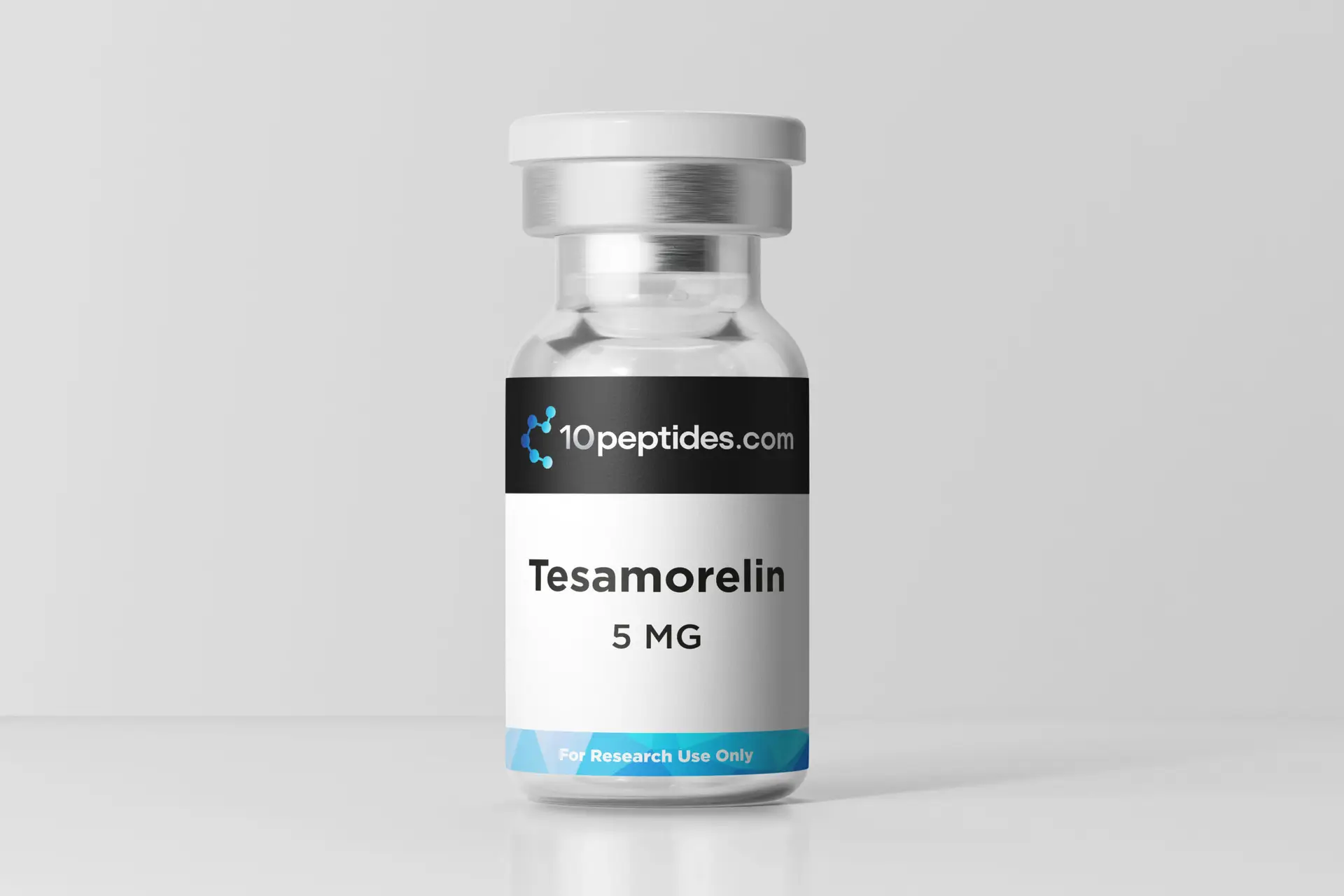
Tesamorelin is a synthetic 44-amino acid polypeptide analogue of human Growth Hormone-Releasing Hormone (GHRH) used to treat HIV-associated lipodystrophy by reducing visceral abdominal fat. It works by binding to and stimulating GHRH receptors in the anterior pituitary gland, increasing endogenous growth hormone (GH) and IGF-1, which promotes lipolysis.
Key Scientific Aspects:
- Structure: Tesamorelin consists of 44 amino acids, featuring a trans-3-hexenoic acid group added to the N-terminal to enhance stability, potency, and resistance to protease cleavage compared to natural GHRH.
- Mechanism of Action: It stimulates the synthesis and release of endogenous growth hormone (GH) from the pituitary, which subsequently increases insulin-like growth factor-1 (IGF-1) levels.
- Metabolic Effects: Specifically, it reduces abdominal fat by boosting lipolysis (fat breakdown) while often increasing lean muscle mass. It is notably effective at decreasing visceral adipose tissue (VAT).
- Therapeutic Application: Approved by the FDA in 2010 for HIV-infected adults with lipodystrophy (excess adipose tissue accumulation).
- Administration: It is administered via subcutaneous injection.
Research also explores its application for reducing liver fat and treating nonalcoholic fatty liver disease (NAFLD) due to its metabolic impact.